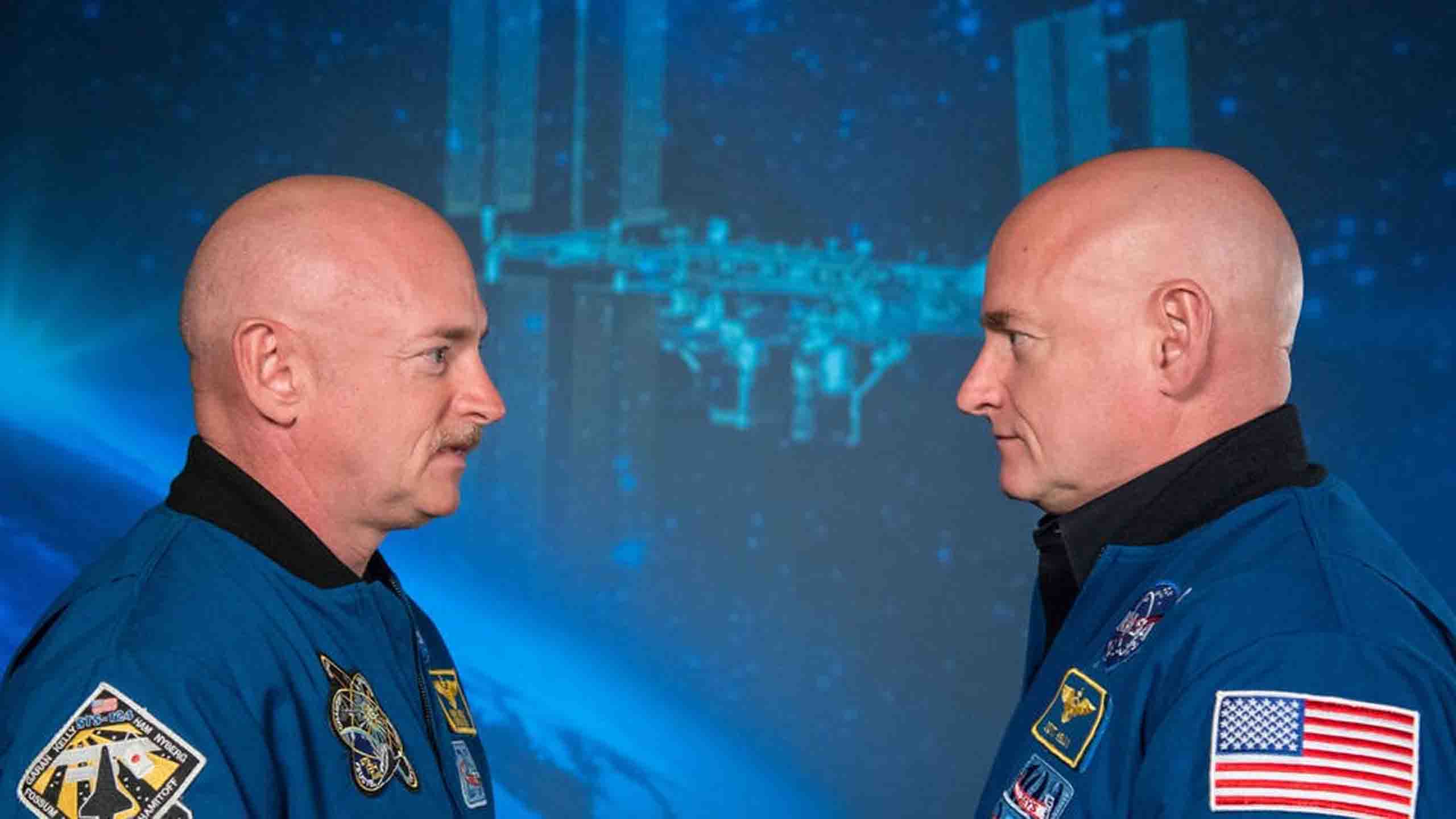
When NASA sent one identical twin into orbit while leaving the other on Earth, they embarked on a unique experiment to uncover the hidden costs of space travel. This unprecedented comparison revealed striking shifts in how the human body functions when removed from Earth’s environment. The findings raise profound questions about what truly happens to us among the stars and what these biological mysteries mean for the future of deep-space exploration.
NASA utilised a pair of identical brothers to assess the physical toll of leaving Earth, stationing one in orbit for a year while the other remained on Earth. Despite sharing the same genetic makeup and identical professional backgrounds, their experiences were separated by vast distances. It was a singular test of how a harsh, alien environment can reshape a person compared to life on Earth.
While one sibling adapted to the weightless, high-radiation, and highly structured confinement of orbit, the other stayed behind to navigate the unpredictable rhythms of life on the ground. This contrast formed the basis for a groundbreaking study, representing one of the most comprehensive examinations of the effects of space travel on our species.
The Reality of a Year Spent in Orbit
As Scott Kelly departed for the International Space Station in 2015, he embarked on a 340-day journey that broke entirely new ground. On the surface, his identical brother, Mark, served as a living control subject for scientists to monitor. This unique setup enabled researchers to measure spatial changes relative to a stable terrestrial reference.
After 27 months of collecting data, the results are in! 🤓 Discover what we learned about the impacts of spaceflight by comparing the DNA of identical twins as one astronaut spent 340 days aboard the @Space_Station while the other remained on Earth: https://t.co/BKEoyfYlpc pic.twitter.com/ecOaWgqPXA
— NASA (@NASA) April 11, 2019
A team of more than 80 NASA experts monitored the two men before, during, and after the flight to assess how Scott’s physiology evolved relative to his brother’s. The goal was to look beyond general reactions to space and pinpoint the specific changes triggered by leaving Earth. By using Mark as a constant, the researchers could isolate the specific biological shifts caused by life in orbit.
Rapid Biological Shifts
The contrast between the two men became clear almost immediately. While in orbit, Scott’s body underwent significant shifts in gene activity, with over 1,000 genes changing their behaviour shortly after he reached the station. Although Mark also saw some natural fluctuations on the ground, his were far less intense, indicating that Scott’s system was responding specifically to the harsh demands of radiation and weightlessness.
The immune response told a similar story, with Scott’s genes becoming hyper-alert as if his system were permanently braced for a threat. Although Mark faced the messy variables of life on the ground, his body never exhibited such intense levels of activity. Perhaps most baffling were the telomeres, or the protective ends of the chromosomes. While Mark followed the usual path of ageing, Scott’s actually grew longer during his time in orbit, defying the expected biological timeline.
Because of Einstein’s twin paradox, Scott Kelly is now ~10 milliseconds younger than his identical twin Mark pic.twitter.com/gMxBwfMjpZ
— New Scientist (@newscientist) March 2, 2016
The return to Earth brought a swift reversal, as Scott’s telomeres shrank quickly, eventually becoming shorter than they were before he ever left. Exposure to cosmic radiation also affected him, with his cells exhibiting significantly more DNA damage and repair than his brother’s.
However, the majority of these biological anomalies proved temporary. Within half a year, over 91 per cent of the shifts in Scott’s gene activity had vanished, bringing his body back into alignment with Mark’s. Despite the data returning to normal, Scott noted that it took nearly eight months to truly feel like himself again.
Redefining the Future of Deep Space Missions
The true worth of this research lies in its precision rather than its surprises. Although the human body was never designed to endure weightlessness or exposure to cosmic radiation, the results demonstrated the resilience of human biology. Knowing that most of these changes are temporary provides vital reassurance for the long-term goal of reaching the Moon and Mars.
However, the data also highlighted potential dangers that could accumulate during longer voyages, such as heart strain, genetic damage, eyesight issues, and a higher risk of cancer. These insights, which eventually appeared in the journal Science, now serve as a vital guide for extended missions beyond our atmosphere.
The study found no obstacles that would completely prevent us from travelling further, though it offered sobering reminders of the health factors that require careful management. NASA began this journey to see how two identical lives would diverge across vastly different environments; they discovered that while space certainly leaves an impression on the body, it is not enough to keep us from the next frontier.