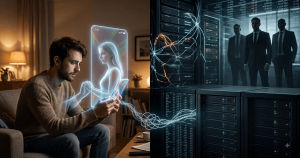
Apple’s cloud infrastructure has come under scrutiny after a major flaw exposed how confidential internal files were routinely sent to former employees long after they left the company. The issue stems from a structural overlap between personal and workplace accounts, leaving ex-staff with live access to unreleased project details on their personal devices. As concerns grow over corporate data security, former workers now find themselves trapped in a complex legal dilemma.
Apple’s decision to link personal and workplace iCloud profiles allowed a group of former employees to view classified records even after their employment ended, according to The Information. After speaking to more than six former employees, the publication found that many had retained access to internal data without realising it.
According to the ex-staffers, numerous Apple documents shared with them during their time at the company, including product launch schedules, continued updating on their personal devices via iCloud long after they had left. In some cases, they even received alerts whenever the files were edited. Several former employees admitted they were petrified to delete the materials, fearing the move could attract unwanted scrutiny from Apple.
How the iCloud Overlap Worked
Corporate files often become intertwined with personal accounts because Apple encourages employees to link their personal Apple Accounts to enterprise iCloud storage. Staff are given access to a 2TB iCloud tier, which they can either add to their primary account or keep separate on a new profile. As Apple devices support only one primary login at a time, most employees choose to use their personal account rather than carry two phones.
Apple’s lawsuit with OpenAI is centered around trade secret theft, but its own policies might muddy the waters.
Because they encourage employees to use their personal iCloud account for work, “a lot of employees end up with retaining access to ongoing live documents that are… pic.twitter.com/r36JWPl0iz
— The Information (@theinformation) August 3, 2026
The iPhone maker maintains a dedicated workplace folder for business files that revokes access once an employee leaves the company. However, some internal documents sit outside that system and become mixed with personal data. Departing staff can also retain access to historical iMessage conversations and media shared through the Messages app.
Apple Says OpenAI Lawsuit Is Unrelated
The continued access to internal infrastructure has also become a key issue in Apple’s lawsuit against OpenAI. In its court filings, the company alleges that former engineer Chang Liu exploited a ‘rare, previously unknown authentication bug’ to access internal systems and harvest files during his time at OpenAI.
Feels like a lot of the problem here is Apple’s policy of requiring employees to use their personal iCloud account for work https://t.co/PQtzZji1hl pic.twitter.com/AYR26PDjrY
— James Titcomb (@jamestitcomb) August 4, 2026
Speaking to The Information, Apple insisted the OpenAI lawsuit has no connection to files that remain accessible through iCloud, adding that it does not pursue legal action against former employees who unintentionally retain corporate documents on personal drives.
‘This case is about OpenAI employees wrongfully taking Apple’s secret and confidential information regarding our unreleased technologies, processes, and products,’ the company said. ‘Nothing in the filing relates to documents shared by, or stored in, iCloud.’
Former Employees Raise Legal Concerns
Former employees argue that Apple does not carry out sufficiently rigorous checks on personal devices to remove confidential records stored in iCloud.
During a previously settled legal dispute, semiconductor firm Rivos alleged that Apple deliberately allows departing employees to retain company data ‘as part of a planned effort to generate a pretextual basis to sue the employees and their new employer for ‘stealing’ Apple material’. In that case, an engineer faced legal action specifically for storing workplace files in a personal iCloud account.
Another former employee sued by Apple, Gerard Williams, filed a counterclaim accusing his former employer of using threats to intimidate staff considering resignation. Apple sued Williams over alleged contractual breaches after he founded silicon start-up Nuvia, presenting extensive phone logs and text messages as evidence. After the court dismissed Williams’ counterclaim, Apple formally dropped its lawsuit in 2023.
Apple also took legal action in 2025 against former Vision Pro specialist Di Liu, alleging he downloaded thousands of proprietary documents to a personal cloud drive shortly before leaving for Snap.
Although The Information stops short of suggesting Apple intentionally allows former employees to retain access to iCloud documents, it says the company’s file-sharing system and the thoroughness with which it removes access for departing staff appear at odds with its strong public stance on privacy and data protection.